Source Centrifugal Spray Dryer for Beverage, Dairy, and Fruit Processing
Find 30 centrifugal spray dryer units designed for converting liquid materials into powder. Buyers can compare specifications, capacities, and atomization modes from suppliers in Changzhou and Henan to suit industrial applications.
Key considerations
Products List




Comprehensive Sourcing Guide
Strategic Sourcing Guide for Centrifugal Spray Dryers
Understanding Core Technical Specifications and Operational Principles
When sourcing a centrifugal spray dryer, buyers must first establish a clear understanding of the fundamental operational mechanics that distinguish this equipment from other drying technologies. The core principle involves transforming liquid materials into powder through a rapid drying process. This transformation is achieved by atomizing the feed solution into fine droplets within a hot air chamber, where the high surface-area-to-volume ratio facilitates immediate moisture evaporation. The technology is often categorized under flash drying or instant drying, emphasizing the speed and efficiency of the moisture removal process.
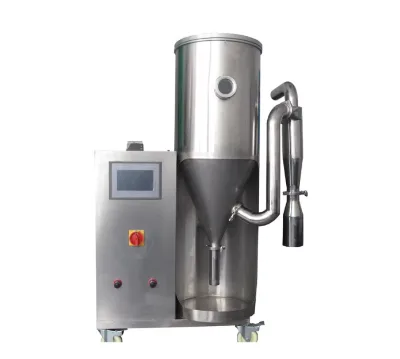
The atomization mechanism is a critical differentiator. In centrifugal systems, the feed is forced through a high-speed rotating wheel, or rotor, which utilizes centrifugal force to break the liquid into a fine mist. This rotary atomization method is distinct from pressure or gas atomization, offering specific advantages in handling viscous materials and controlling particle size distribution. The flow mode within the drying chamber is equally significant; systems may operate on co-current, counter-current, or mixed-current principles. Co-current flow, where the hot air and product move in the same direction, is often preferred for heat-sensitive materials to prevent overheating, while counter-current flow may be selected for specific thermal efficiency requirements.
Capacity and evaporation rates vary widely depending on the specific model and configuration. Observed market data indicates a broad operational range, with evaporation capacities spanning from 5 liters per hour up to 2000 liters per hour, and in some industrial configurations, extending significantly higher. The drying air temperature is typically adjustable, often operating below 350 degrees Celsius, allowing for precise control over the thermal profile to suit diverse product requirements. The feed delivery system is another technical consideration, with peristaltic pumps frequently utilized to ensure consistent flow rates and adjustable feeding speeds. Buyers should verify that the equipment material status aligns with their process needs, whether the input is a solution or the output is a powder, and ensure the machine is designed for the specific processing material, such as natural ingredients or special agricultural products.
Compliance, Certification, and Regulatory Standards
Navigating the regulatory landscape is a non-negotiable aspect of sourcing industrial drying equipment. Compliance ensures that the machinery meets international safety, environmental, and quality standards, which is particularly vital for industries handling food, pharmaceuticals, and pet food. When evaluating potential suppliers, buyers must verify the presence of recognized certifications. Common standards observed in the market include ISO 9001 for quality management systems and ISO 14001 for environmental management. These certifications indicate that the manufacturer adheres to systematic approaches for quality control and environmental responsibility.
Safety and electrical compliance are also paramount. Certifications such as CE (Conformité Européenne) and UL (Underwriters Laboratories) are frequently cited, signaling that the equipment meets specific safety requirements for operation in various regions. For food processing applications, HACCP (Hazard Analysis and Critical Control Points) compliance is essential to ensure that the drying process does not introduce biological or chemical hazards. Additionally, specific product standards like ISOUL may be relevant depending on the region and application. It is crucial for buyers to request documentation proving these certifications rather than relying on verbal assurances.
The material construction of the dryer is intrinsically linked to compliance, particularly regarding food safety. The equipment is often constructed from stainless steel, with grades such as SUS304 and SUS316 being standard choices due to their corrosion resistance and non-reactive properties. Carbon steel may be used for non-contact structural components, but the product contact surfaces must be verified. Buyers should confirm that the material specifications match the regulatory requirements of their target market. For instance, SUS316 is often preferred for applications involving high chloride content or aggressive cleaning agents. The condition of the machinery, typically listed as "New," should be accompanied by a machinery test report provided by the supplier, which serves as empirical evidence of the equipment's performance and safety prior to shipment.
Cost Drivers and Financial Considerations
The total cost of ownership for a centrifugal spray dryer is influenced by a complex interplay of factors beyond the initial purchase price. While observed price ranges in the market can be extensive, spanning from low-cost entry models to high-end industrial systems reaching significant values, the specific cost for a buyer depends heavily on customization and capacity. The primary cost driver is the evaporation capacity; a unit capable of processing 2000 liters per hour will naturally command a higher price than a 5-liter per hour unit. Furthermore, the choice of heat source significantly impacts both the capital expenditure and the operational expenditure. Options include fuel, natural gas, coal gas, steam, and electricity. The selection depends on local utility costs and site conditions, with some systems offering optional heating modes to adapt to specific facility constraints.
Customization is another major factor influencing cost. The ability to customize the machine, including the atomization mode, flow configuration, and material grades, adds to the base price. For example, specifying SUS316 stainless steel for all product contact parts rather than standard SUS304 will increase the material cost. Similarly, the inclusion of advanced control systems, such as touch screen interfaces versus basic button controls, affects the overall price. The packing method, whether standard export packaging or a specialized wooden case, also contributes to the logistics cost. Buyers should be aware that while some suppliers may advertise competitive pricing, the long-term value is determined by energy efficiency, maintenance requirements, and the durability of the materials used.
Lead times are a critical financial consideration as they impact production scheduling. A standard lead time for these units is often around 30 working days, but this can vary based on the level of customization and the manufacturer's current workload. Buyers must factor in this timeline when planning their production cycles. Additionally, the voltage requirements may need to be customized to match the local power grid, which can introduce additional engineering costs. It is advisable to request a detailed breakdown of costs, including the base machine, customization fees, packaging, and shipping, to avoid hidden expenses that could inflate the total budget.
Typical Applications and Industry Versatility
Centrifugal spray dryers are highly versatile and are employed across a diverse range of industries due to their ability to handle various processing materials. The technology is particularly well-suited for converting liquid feeds into dry powders, making it indispensable in sectors where product stability, solubility, and flowability are critical. In the food and beverage industry, these dryers are used for processing dairy products, fruit and vegetable juices, and ice cream mixes. The gentle drying process helps preserve the flavor, color, and nutritional value of sensitive ingredients, which is a key requirement for high-quality food products.
The application extends beyond food to include the pharmaceutical and chemical sectors. In these industries, the ability to produce uniform particle sizes and control moisture content is essential for product efficacy and stability. The dryer is also utilized in the production of pet food, where the extrusion and drying of nutrient-rich formulations require precise thermal control. Furthermore, the processing of chocolate and other confectionery ingredients benefits from the rapid drying capabilities of centrifugal spray dryers, which prevent caking and ensure a consistent texture.
The versatility of the equipment is further enhanced by its adaptability to different feed types. Whether the input is a natural ingredient solution or a special agricultural product, the centrifugal atomization ensures efficient drying. The adjustable air temperature and flow modes allow operators to tailor the process to the specific thermal properties of the material. For instance, heat-sensitive materials can be dried at lower temperatures to prevent degradation, while robust materials may require higher thermal inputs for efficient moisture removal. This flexibility makes the centrifugal spray dryer a valuable asset for manufacturers looking to diversify their product lines or optimize their production processes.
Supplier Evaluation and Quality Assurance Protocols
Selecting the right supplier is as critical as selecting the right equipment. Buyers should prioritize suppliers who demonstrate a robust track record in manufacturing and supplying centrifugal spray dryers. Key indicators of a reliable supplier include the provision of comprehensive machinery test reports, which validate the performance and safety of the equipment before it leaves the factory. These reports should detail the results of functional tests, including drying efficiency, temperature uniformity, and atomization consistency.
The origin of the equipment is another factor to consider. While suppliers may be located in various regions, such as Changzhou or Henan in China, the geographical location should not be the sole determinant of quality. Instead, buyers should focus on the supplier's adherence to international standards and their ability to provide after-sales support. A supplier's commitment to quality is often reflected in their certification status, such as ISO 9001 and HACCP, which indicate a systematic approach to quality management.
When evaluating suppliers, buyers should also assess their customization capabilities. The ability to tailor the equipment to specific site conditions, such as heating modes and voltage requirements, is a sign of a flexible and responsive manufacturer. Additionally, the packing method, whether standard export packaging or a wooden case, should be designed to protect the equipment during transit. Buyers should request references from previous clients and inquire about the supplier's experience in handling similar projects. It is also important to verify the supplier's lead time commitments and their ability to meet delivery schedules, as delays can disrupt production planning.
Long-Term Procurement and Maintenance Strategies
Procuring a centrifugal spray dryer is a long-term investment that requires careful consideration of maintenance and operational longevity. The equipment's durability is heavily dependent on the materials used in its construction. Stainless steel grades like SUS304 and SUS316 are preferred for their resistance to corrosion and ease of cleaning, which are essential for maintaining hygiene standards in food and pharmaceutical applications. Buyers should ensure that the supplier provides clear guidelines on material maintenance and cleaning procedures to extend the equipment's lifespan.
Regular maintenance is crucial for sustaining optimal performance. The rotating atomizer wheel, a critical component of the centrifugal dryer, requires periodic inspection and replacement to prevent wear and tear. The heating system, whether it utilizes fuel, gas, or electricity, also needs regular checks to ensure efficient operation and safety. Buyers should inquire about the availability of spare parts and the supplier's support for maintenance services. A supplier that offers comprehensive training and technical support can significantly reduce downtime and operational costs.
Furthermore, the adaptability of the equipment to future production needs is an important long-term consideration. As production volumes or product formulations change, the ability to adjust the drying parameters, such as air temperature and flow mode, becomes increasingly valuable. Buyers should select a supplier that offers scalable solutions and can provide upgrades or modifications as their business grows. By focusing on these long-term factors, buyers can ensure that their investment in a centrifugal spray dryer delivers sustained value and operational efficiency over its entire lifecycle.
Summary of Key Technical Parameters
To facilitate a comprehensive comparison of available options, the following table summarizes the key technical parameters observed in the market for centrifugal spray dryers. This data serves as a reference point for buyers to align their specific requirements with available equipment specifications.
| Parameter | Observed Range / Options | Notes for Verification |
|---|---|---|
| Evaporation Capacity | 5 kg/H to 30000 kg/H | Verify specific model limits for your throughput needs. |
| Atomization Mode | Rotary Atomization | Confirm rotor speed and material compatibility. |
| Flow Mode | Co-Current / Counter-Current / Mixed | Select based on thermal sensitivity of the product. |
| Heat Source | Fuel, Natural Gas, Coal Gas, Steam, Electricity | Assess local utility availability and cost. |
| Air Temperature | Below 350°C (Adjustable) | Ensure adjustability matches product thermal limits. |
| Material Grade | SUS316, SUS304, Carbon Steel | Verify contact surface materials for food/pharma compliance. |
| Control Operation | Touch Screen, Button | Evaluate user interface complexity and automation level. |
| Packing | Wooden Case, Standard Export | Confirm protection level for international shipping. |
| Lead Time | Approx. 30 Working Days | Confirm current schedule and customization impact. |
| Certifications | ISO9001, ISO14001, CE, HACCP, UL | Request valid certificates for all applicable standards. |
This summary highlights the variability in specifications and underscores the importance of detailed verification. Buyers should use these parameters as a checklist to ensure that the selected equipment meets their specific operational, regulatory, and financial requirements. By rigorously evaluating these factors, procurement teams can make informed decisions that optimize their production capabilities and ensure long-term success in their respective industries.
FAQs
What materials are used for the dryer construction?
The equipment is constructed from Stainless Steel SUS316, SUS304, or Carbon Steel. Buyers can request specific material grades like Stainless Steel to meet their processing requirements.
How is the liquid material transformed into powder?
The machine uses centrifugal atomization to flash dry liquid solutions into powder. This process involves spraying the feed into hot air with temperatures adjustable below 350 degrees Celsius.
What certifications does the spray dryer equipment hold?
The machinery complies with ISO9001, ISO14001, CE, HACCP, and UL standards. These certifications ensure quality management and safety for food and industrial applications.
Can the equipment be customized for specific needs?
Yes, customization is available for heat sources, atomization modes, and material grades. Buyers can specify requirements for the drying chamber and control systems.
What is the typical lead time for delivery?
The standard lead time is 30 working days for manufacturing and preparation. This duration may vary slightly depending on the level of customization requested.
Which industries can utilize this spray drying technology?
This equipment serves the beverage, dairy, fruit, vegetable, ice cream, chocolate, and pet food sectors. It is designed to handle natural ingredients and special agricultural products.